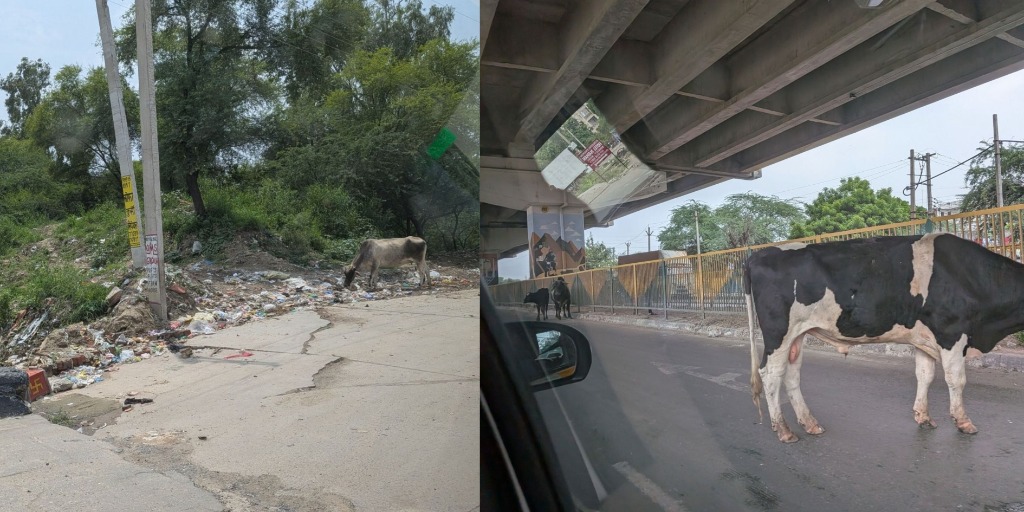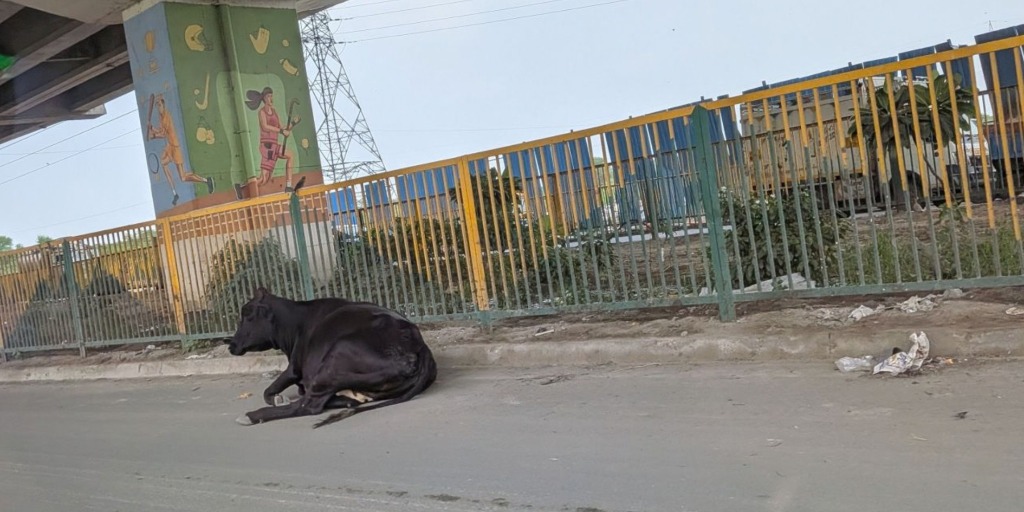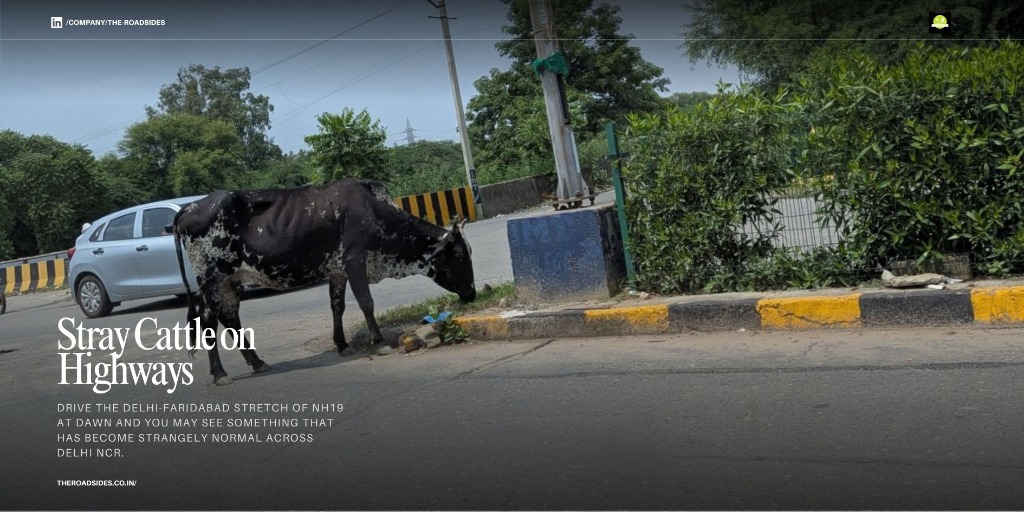
Drive the Delhi-Faridabad stretch of NH19 near Badarpur at dawn and you may see something that has become strangely normal across Delhi NCR: stray cattle standing on, or crossing, a fast-moving highway. Drivers brake, swerve and carry on. But once the moment passes, what happens to that hazard? In most cases, nothing, because there is no clear place to report it.
Why stray cattle on highways are a serious road safety risk
A cow on a high-speed road gives a driver very little time to react. At dawn, dusk and at night, when visibility drops, that window shrinks further. A sudden brake can cause a rear-end collision, a swerve can push a vehicle into the next lane, and heavy trucks simply cannot stop in time. The danger falls on everyone: two-wheeler riders, truck drivers, families in cars and the animals themselves.
This is not limited to one road. Stray cattle on expressways and highways is a pattern seen across India, which is why we see it as a systems problem, not a single bad stretch.
The reporting gap: what civic apps can and cannot log
The Swachhata App is the government's civic reporting tool, and it helps citizens flag sanitation issues such as garbage. But stray cattle on a highway has no category of its own. A citizen who wants to report the hazard has no obvious place to start, so most people do the sensible thing and simply drive on.
Why an unreported hazard never gets fixed
Here is the chain that matters. A hazard has to be reported before it can be recorded. It has to be recorded before a pattern can be seen. A pattern has to be seen before an authority can act, and only then does a road get safer. Break the first link and everything after it stops.
The result is that the next incident happens on the same stretch of road, and the one after that, with nothing on record to show it was ever a problem.